Storia
The Whys
Nowadays, deciding between an in-house and a SaaS solution is a critical choice for enterprises looking for competitive advantages, and depends upon many factors which can significantly impact an organization's business.
ApiShare was initially developed with a SaaS distribution model in mind. The aim was to deliver value to the customers while removing the need for them to install and run it on their own data centers.
This solution entails a multi-tenant approach, where every instance of the software runs on our cloud servers, leveraging a common infrastructure, platform and code version. These elements are shared across all tenants, with every tenant dedicated to a specific customer, keeping their data segregated. A single, shared infrastructure allows the operations and development teams to manage maintenance, updates, and fixes efficiently.
Such ready-made solution grants the following benefits:
Accessibility. Users can access the software from any internet-enabled device and location, promoting remote work, collaboration and streamlined communication.
Cost-effectiveness. SaaS involves lower upfront costs as it avoids expenses such as hardware acquisition, provisioning, installation, maintenance and support for the client. Customers need not worry about applying updates and patches. The source code is the same for all customers and new features or bugfixes are rolled out concurrently to all of them.
Scalability. It enables the customer to only pay for the resources it uses and easily expand as its business grows. The Operations team takes care of planning all server capacity required to accommodate increased user demand and data storage needs.
Security. The software is regularly updated with the latest features and security patches. The Operations team ensures that your dedicated tenant is always up to date, secure and has a daily backup.
Recently, however, there has been an increase in interest for private cloud installations. While SaaS distributions are extremely popular for the reasons stated above, private cloud installations are not without advantages of their own, such as a higher level of control over product components and data. That’s what drove us to reengineer ApiShare, introducing a “local” installation solution, which can be deployed on any customer’s private cloud.
Private cloud - sometimes referred to simply as a data center - resides on a company's own infrastructure and has the following strengths:
In-house knowledge. Private-cloud customers already have full control and mastery over their internal resources. For example, they could leverage their own centralized SIEM platforms to preemptively identify threats or vulnerabilities, quickly addressing possible security concerns.
Maximize resource efficiency. The virtualization technology underlying private cloud computing optimizes utilization of underused resources. Clients can reuse their own preexisting resources, like domains and certificates, as well as dedicated maintenance, backup and support capabilities.
Reduced costs. The flexibility of virtualization helps the organization in reducing costs by getting the most out of their assets.
Security. Private cloud physical security is easier to ensure since it runs on physical machines. Private cloud access is also more secure because access is usually via private and secure network links rather than the public Internet.
Regulatory compliance. Private cloud facilitates compliance with regulatory requirements by keeping sensitive information within organization infrastructure where the company can ensure data privacy and security policies are strictly followed.
The Hows
For all the reasons mentioned above, installing ApiShare as a local solution can be a good choice for all those customers which prefer or need a private cloud configuration. To cover this requirement we evolved ApiShare towards a portable solution, supplementing our a SaaS offering with a private cloud one. Ti accomplish this we had to shift as many architectural elements as possible into the Kubernetes cluster, containerizing product components and features such as:
The API Gateway
The Identity Provider
The Email delivery system
The web hosting solution
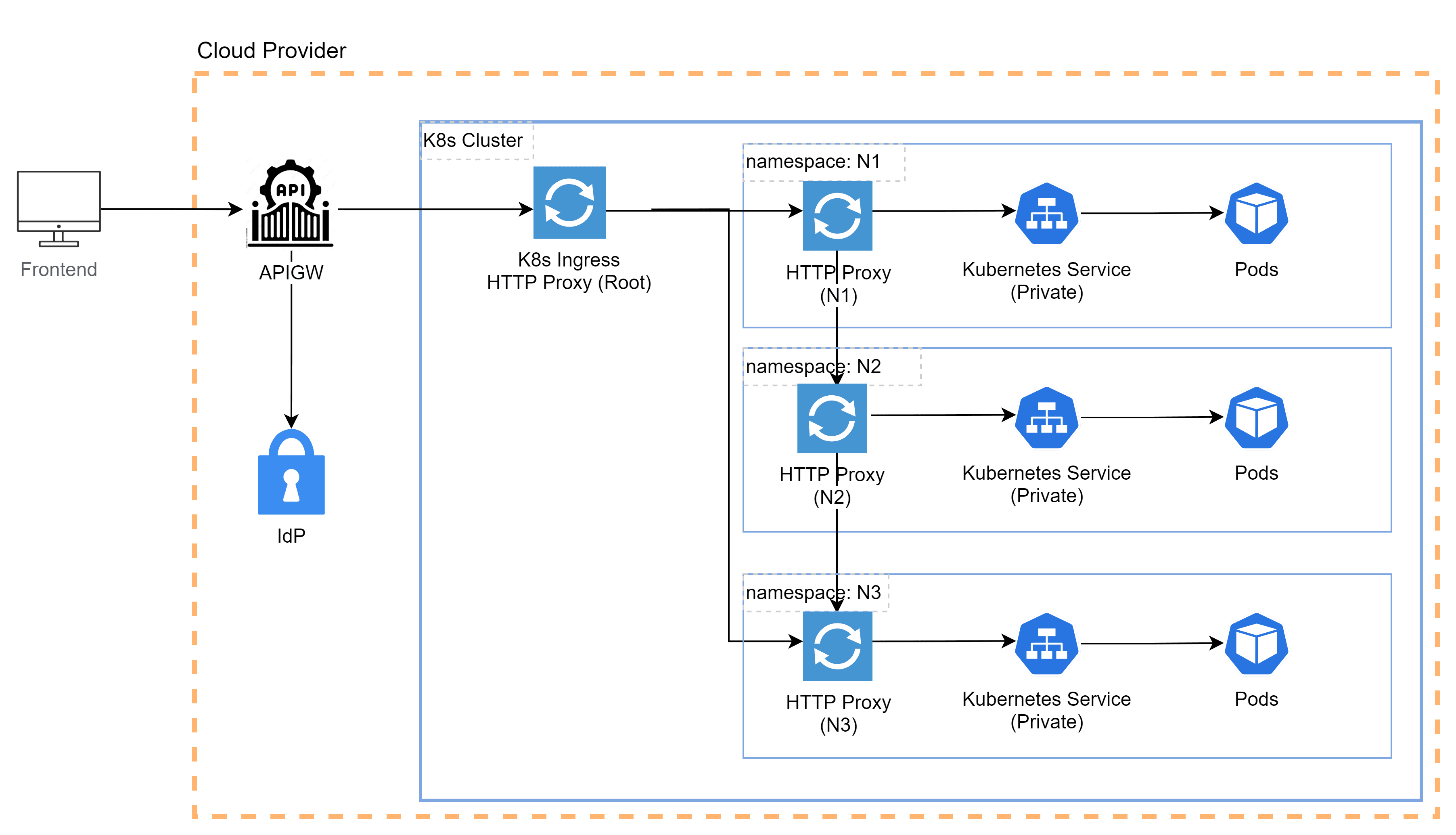
Moving away from cloud vendor lock-in and containerizing these tools ensures full portability capabilities across diverse environments and mitigates reliance on a single third-party cloud provider. Moreover, containerization optimizes resource usage, enhancing cost efficiency.
These changes grant the flexibility needed to base resource allocation on workload requirements, which can result in significant cost savings compared to a purely SaaS solution.
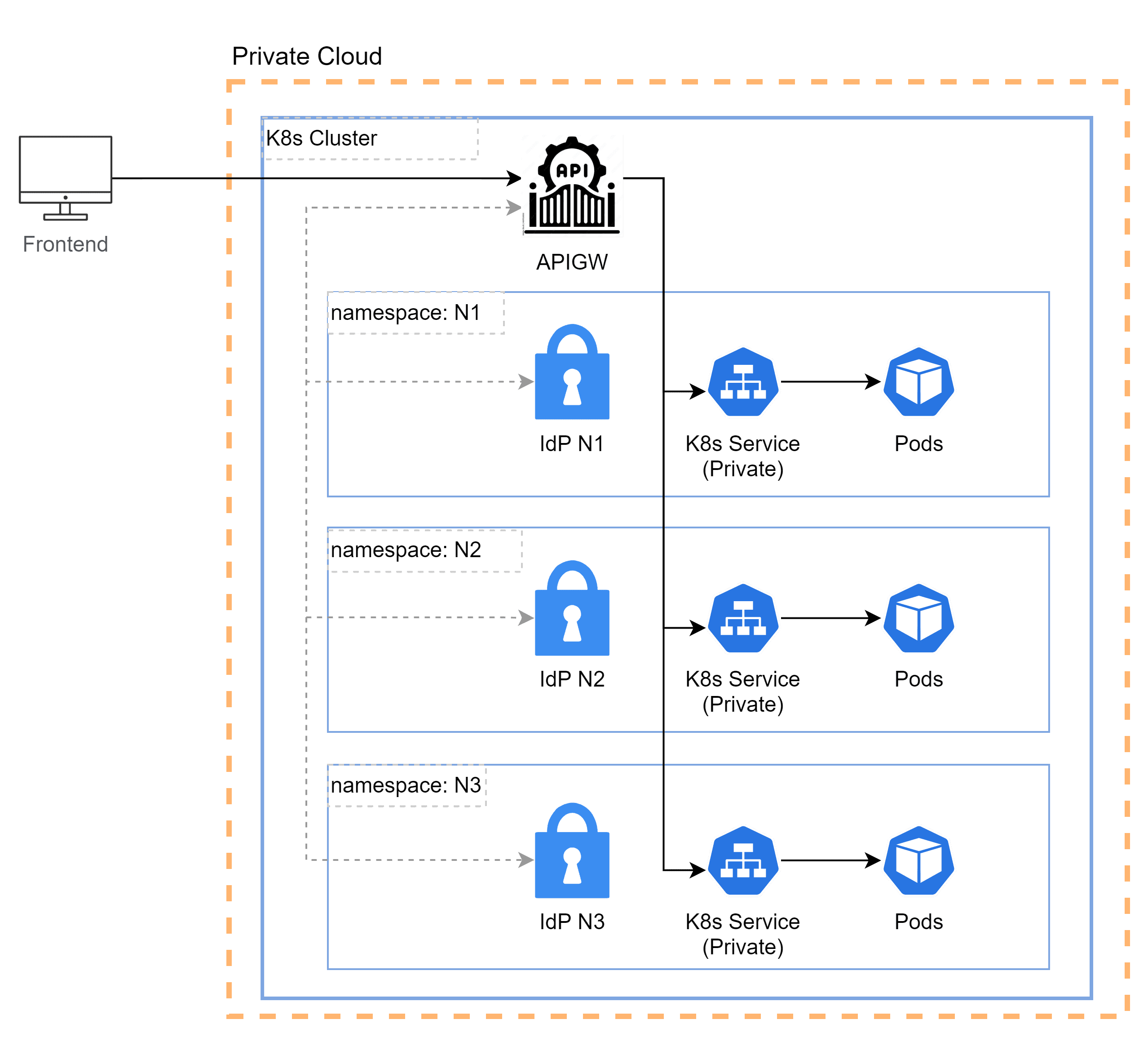
The new containerized API Gateway and Identity Provider components provide greater control through fine-tuning configurations and customizations, which are not always possible on a cloud service, and, even when possible, are often distinctly complex and inelegant. This flexibility empowers our development and operations teams to efficiently tailor the infrastructure to the specific product needs.
Another optimization to make ApiShare’s infrastructure portable involves the email delivery system, once reliant on a cloud managed service and now implemented by a dedicated microservice integrating with a standard SMTP server. Similarly, the Frontend hosting, which was previously based on a dedicated cloud storage and Content Delivery Network solution, is now also implemented by an internal microservice leveraging a standard storage provisioning and hosting stack.
All in all, these changes improved maintainability and control over every single component, facilitated the setup of ApiShare on any container-based orchestrator platform and even more importantly eliminated the need for clients to supply some of their own private cloud services.
Shifting all these functionalities inside the product also drastically reduced the complexity of integrating it in the client environment, simplifying everybody’s work during the initial installation phase. ApiShare’s CI/CD approach, already present for SaaS environments, has also evolved, developing a dedicated local installation package. This drastically reduced installation time and effort.
Conclusions
Supplementing a pure SaaS model with a local offering signifies a strategic move towards portability, adaptability, cost-effectiveness, and control. This evolution not only future-proofs ApiShare against cloud providers lock-in, but more importantly broadens customer options, with the aim of empowering them and let them innovate with agility in a dynamic technological landscape.