Search...

Out of support

Search...

Out of support

Introduction

The Platform structures its ecosystem of digital products around Organizations and Groups, enabling controlled access, product ownership, and governance alignment with enterprise policies.

Organization types

The Platform supports three organization types, each designed for different governance and access needs:

  • Internal Organizations: Represent business units within a company, managing proprietary digital products and applications. Members have structured access based on group roles and assigned permissions.

  • Partner Organizations: Designed for business partners collaborating with internal organizations, with restricted access to specific digital products and applications.

  • Citizen Organizations: Enable public exposure of digital products, granting controlled access for external individual users or public consumers.
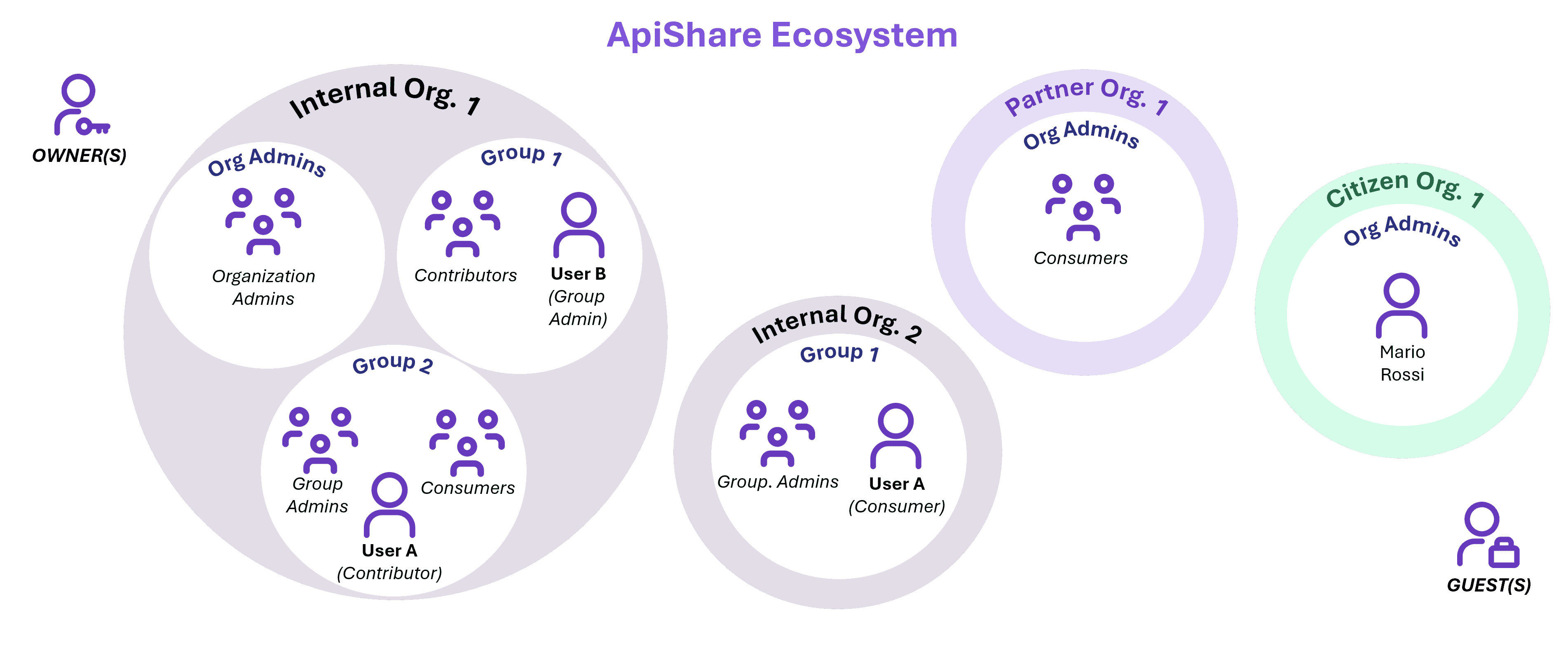
Diagram of the ApiShare ecosystem: owners, internal, partner and citizen organizations with their groups and roles

Each organization type operates under custom visibility rules that define how digital products, applications, and users interact within the ecosystem. Administrators can also configure, for each user type, which sections and catalogs are available (for example whether a user type sees the Active Catalog or the API Catalog).

Organization categories

Organizations in the Platform can be further categorized to model different collaboration scenarios. Categories help administrators:

  • Define governance models based on organizational purpose.

  • Segment consumers and producers more effectively.

  • Establish access policies for digital products at an organizational level.
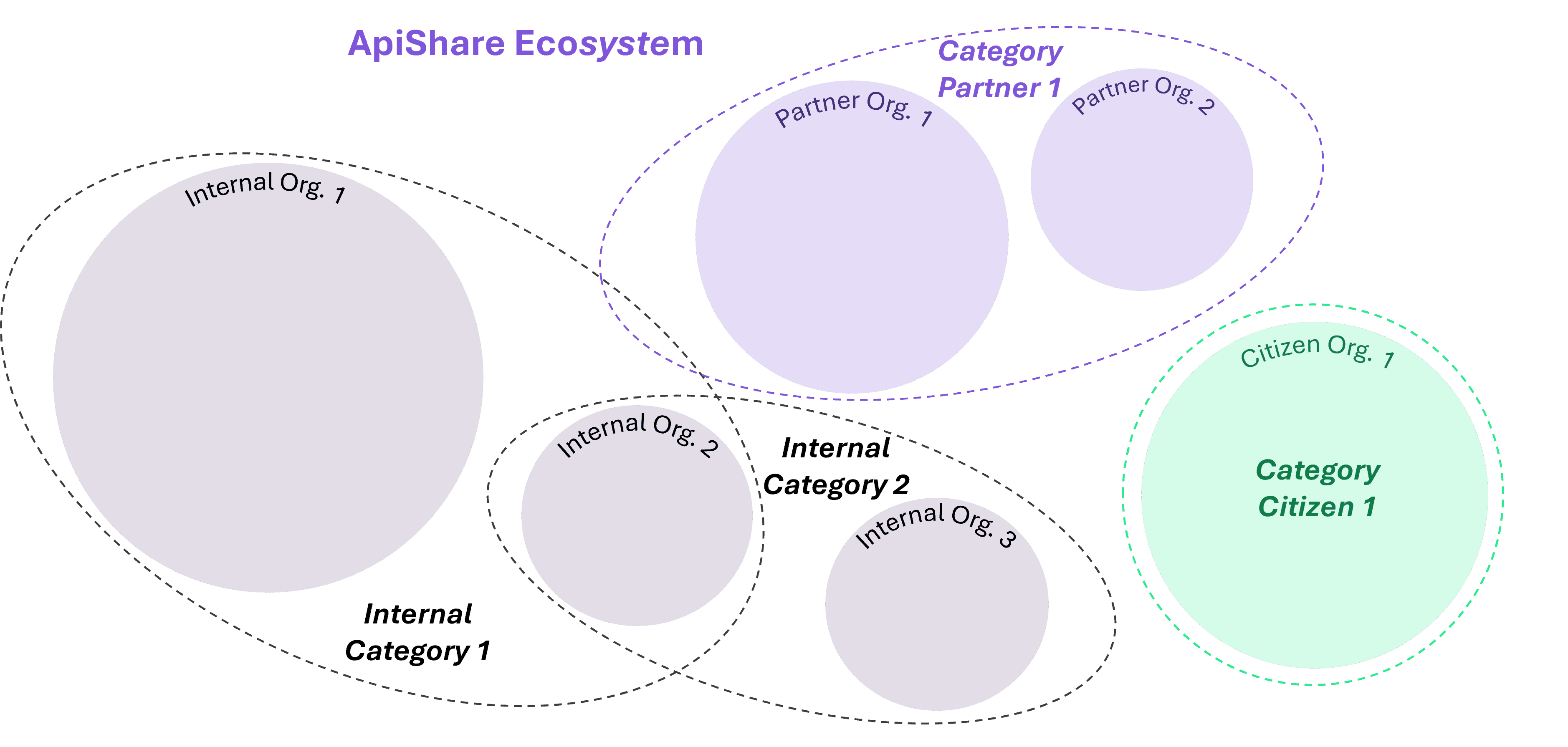
Diagram grouping internal, partner and citizen organizations into categories

Each category is configured in Administration › Categories and ensures alignment with business strategies.

Organization structure: groups

Organizations in the Platform are structured into Groups, which are essential for managing product ownership and access control, ensuring granular control over governance, aligned with enterprise security policies. Members of the same group share the digital products they work on, their subscription requests and the related credentials.

Group administration

There are two types of groups within an organization:

  • Org Admins: Manage the organization, its groups and users, join requests and invitations, product visibility and group settings.

  • Custom Groups: Defined by administrators, allowing specific access rules for different teams or business units. Each group can have its own group administrators, who manage the members of that group.

Menu della documentazione

Introduction

Table of Contents

The Platform structures its ecosystem of digital products around Organizations and Groups, enabling controlled access, product ownership, and governance alignment with enterprise policies.

Organization types

The Platform supports three organization types, each designed for different governance and access needs:

  • Internal Organizations: Represent business units within a company, managing proprietary digital products and applications. Members have structured access based on group roles and assigned permissions.

  • Partner Organizations: Designed for business partners collaborating with internal organizations, with restricted access to specific digital products and applications.

  • Citizen Organizations: Enable public exposure of digital products, granting controlled access for external individual users or public consumers.

Diagram of the ApiShare ecosystem: owners, internal, partner and citizen organizations with their groups and roles

Each organization type operates under custom visibility rules that define how digital products, applications, and users interact within the ecosystem. Administrators can also configure, for each user type, which sections and catalogs are available (for example whether a user type sees the Active Catalog or the API Catalog).

Organization categories

Organizations in the Platform can be further categorized to model different collaboration scenarios. Categories help administrators:

  • Define governance models based on organizational purpose.

  • Segment consumers and producers more effectively.

  • Establish access policies for digital products at an organizational level.

Diagram grouping internal, partner and citizen organizations into categories

Each category is configured in Administration › Categories and ensures alignment with business strategies.

Organization structure: groups

Organizations in the Platform are structured into Groups, which are essential for managing product ownership and access control, ensuring granular control over governance, aligned with enterprise security policies. Members of the same group share the digital products they work on, their subscription requests and the related credentials.

Group administration

There are two types of groups within an organization:

  • Org Admins: Manage the organization, its groups and users, join requests and invitations, product visibility and group settings.

  • Custom Groups: Defined by administrators, allowing specific access rules for different teams or business units. Each group can have its own group administrators, who manage the members of that group.